



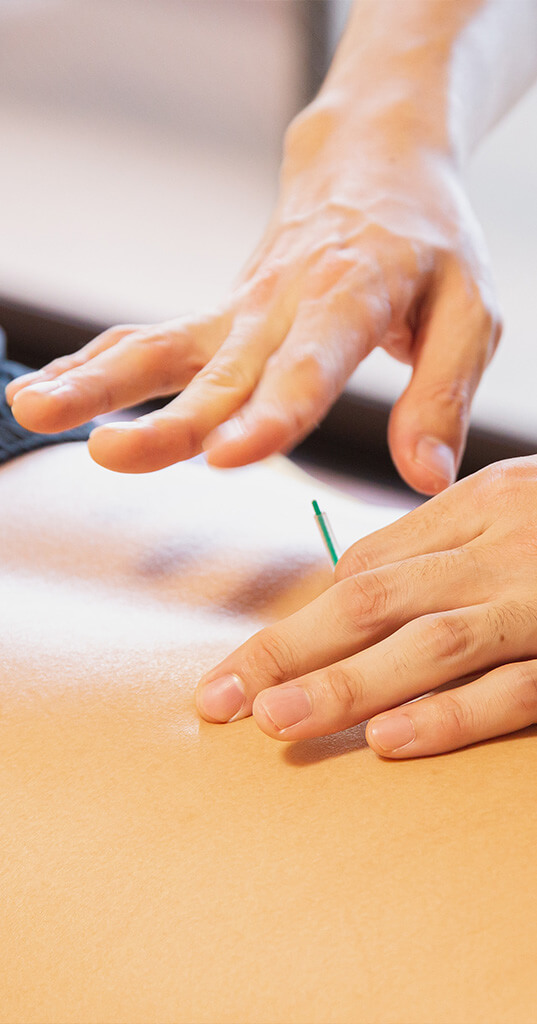
The basic principle of the dry needling is to “release” any potential myofascial trigger points by inserting a sterile, fine, flexible, single-use needle through the skin into the muscle.
Dry needling helps deeper tissue structures relax, thus delivering significantly improving movement and pain relief.
The reason it is referred to as “dry” is because no pharmaceutical substance is injected during the needle insertion. This enables us to use traditional acupuncture needles, which are thinner and better tolerated by patients.
Dry needling is based on the deactivation of trigger points, which are located in the muscles and fascia, as they are largely responsible for pain both in the area of the problem and away from it. By deactivating these areas, followed by a personalized workout program, pain symptoms can be reduced or completely eliminated, and muscle and joint functionality can be enhanced.
Dry needling
Treatments
Indications
- Dry needling has immediate effects in the treatment of musculoskeletal diseases and injuries, such as:
- Cervical syndrome
- Back pain
- Low back pain
- Carpal tunnel syndrome
- Frozen shoulder
- Tendonitis-tendonopathy
- Myalgia
- Cramps
- Stiff joints
- Piriformis syndrome
- Fascia lata syndrome
- Plantar fasciitis
- Headache-migraine
Contraindications
- Trypanophobia (intense fear of needles)
- Anticoagulants
- People with a weak immune system run a higher risk of infections
- People who have undergone a lymphadenectomy are at risk of developing lymphedema
- Recent injury
- Pregnancy
- Skin condition, e.g., psoriasis and eczema
- Acute internal organs disease
- Psychiatric disorders.
Safety & Health
It takes expert anatomy knowledge and professional training in palpation techniques for the safe procedure of dry needling. The doctor or physiotherapist should always know the exact tissue or structure where the needle is being inserted.
It must also be applied under strict hygienic conditions, using only sterile disposable needles.